Starvard University · Philosophy
The biggest questions humans ever asked: what is real, what is right, and what makes a life worth living. This course teaches you to ask those questions well and answer them for yourself.

The whole course in brief
Twelve lessons, twelve big ideas.
The twelve lessons
Lesson 1
Philosophy is not about memorizing what dead Greeks said. It is the practice of stepping back and asking: what do I actually mean by that, and how do I know it? Every field eventually bumps into philosophy. Physics bumps into "what is real." Psychology bumps into "what is a mind." Politics bumps into "what is fair." Philosophy is what happens when you keep asking "why" past the point where most people stop.
The tools are simple: define your terms, follow the argument where it leads, and argue against yourself. Most people never do this. They inherit beliefs like hand-me-down clothes and never check the fit. Philosophy is trying things on on purpose, and it is a skill that improves every part of your thinking.
Lesson 2
Socrates never wrote a book. He walked around Athens asking people questions until their confident answers fell apart. His point was not to embarrass them (though it did). It was that most of us claim to know things we have never actually thought through. He called himself wise only because he knew how little he knew.
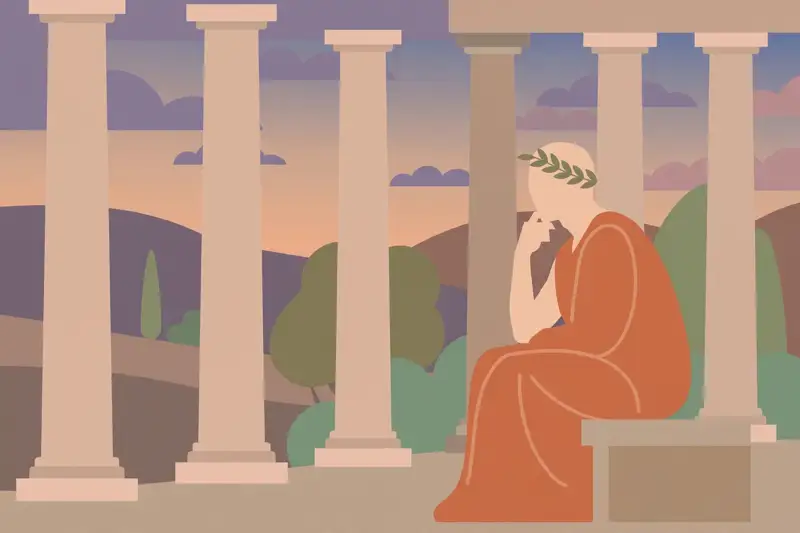
"The unexamined life is not worth living," he said at his trial. He was sentenced to death for corrupting the youth, and he drank the poison rather than stop asking questions. You do not need to go that far. You just need to ask, once in a while: do I believe this because it is true, or because everyone around me believes it?
Lesson 3
Epistemology is the fancy word for the study of knowledge. The classic definition: knowledge is justified true belief. You believe it, it is true, and you have good reasons. Each part matters. A lucky guess can be true and believed, but it is not knowledge, because the reasons were missing.
Skeptics push further: can you prove you are not dreaming right now? You cannot, not fully. Descartes tried to doubt everything and found one thing he could not doubt: that he was thinking. "I think, therefore I am." From that one solid rock he tried to rebuild everything. You do not need his whole system, just the habit: sort your beliefs into "proven," "probable," and "assumed," and notice how much lives in the third pile.
Lesson 4
When you ask "what should I do," three great traditions answer. Utilitarianism says: do what creates the most happiness for the most people. Judge the action by its consequences. Deontology (Kant) says: some things are just wrong, no matter the outcome. Follow rules you could wish everyone followed. Virtue ethics (Aristotle) says: stop obsessing over individual actions and ask what kind of person you are becoming. Practice courage, honesty, and generosity until they are habits.
Each one breaks somewhere. Utilitarianism can justify sacrificing one innocent person to save five. Kant's strict rules can forbid a small lie that would save a life. Virtue ethics is vague about hard cases. The point is not to pick a team. The point is that you now have three lenses, and hard moral questions get clearer when you look through all three.
Lesson 5
Here is the unsettling argument: every event has a cause, your brain is a physical thing, so your "choices" were fixed by genetics and history long before you were born. That is determinism, and a lot of smart people think it is true. If it is, then blame and praise start to look strange. Can you blame someone for what they could not avoid doing?
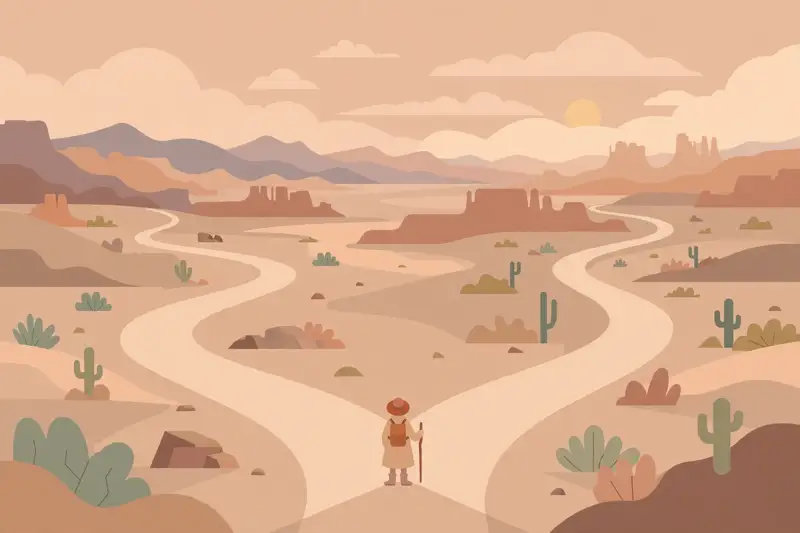
The other side says: even if the universe is determined, you still deliberate, weigh reasons, and act on them. That deliberation IS you. Some philosophers say free will just means acting on your own desires without being forced. Others say the whole question is a confusion about words. Notice what is at stake either way: how we punish criminals, how we raise kids, whether regret makes sense.
Lesson 6
The Ship of Theseus: a ship's planks are replaced one by one until none of the original wood remains. Is it the same ship? Now apply it to you. Your cells replace themselves, your beliefs change, your memories fade and rewrite themselves. What makes you the same person as the five-year-old in the photo?
Answers on offer: your body (but it changes), your memories (but they are unreliable), your soul (but can you prove it), or a story you keep telling about yourself (which you can edit). There is no settled answer, and that is the point of the lesson: identity is not a fact you discover, it is partly a thing you build. The question "who am I" is also an assignment: who do you want to be?
Lesson 7
Every argument is premises plus a conclusion. A valid argument is one where the conclusion MUST follow if the premises are true. A sound argument is valid AND the premises are actually true. Most arguments you hear are neither. Learning to check validity is like learning to check whether a bridge can hold weight before you drive across it.
Then come the fallacies, the classic bad moves: attacking the person instead of the argument (ad hominem), saying "everyone agrees" (bandwagon), the false dilemma ("you are either with us or against us"), and begging the question (sneaking the conclusion into the premises). Learn ten fallacies by name and you will hear them everywhere: in ads, in politics, in your own head.
Lesson 8
Political philosophy asks what we owe each other. John Rawls offered a famous thought experiment: design society from behind a "veil of ignorance," not knowing whether you will be born rich or poor, talented or struggling, lucky or not. Whatever rules you would accept blind, those are the just ones. It is a clever trick for removing selfish bias from the question.
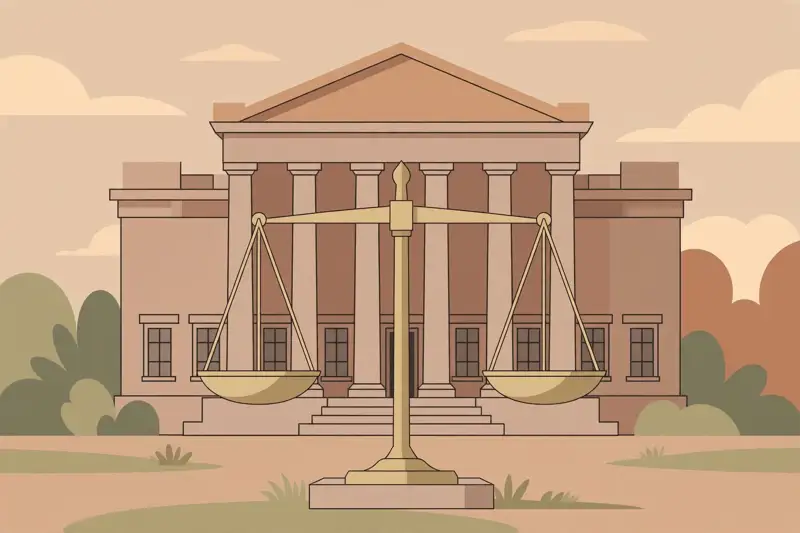
Others disagree hard. Libertarians say justice is about rights and consent: taking from some to give to others is wrong even if it helps. Utilitarians say justice is whatever maximizes overall wellbeing. Communitarians say you cannot design society from nowhere; real communities with real traditions come first. Democracy itself is a philosophical bet: that ordinary people, arguing it out, land closer to justice than any king or expert.
Lesson 9
The existentialists started from a bleak observation: the universe does not come with a purpose label. No cosmic instruction manual. Sartre said we are "condemned to be free": even not choosing is a choice, so you are responsible for the life you build. That is terrifying, and it is also the good news.
Meaning, it turns out, is not found like a lost key. It is made, the way a carpenter makes a chair. The research agrees with the philosophers here: people who report meaningful lives share the same ingredients. Commitments bigger than themselves, craft they keep improving, people they show up for, and suffering they chose for a reason. You do not find the meaning of life. You assign it, daily.
Lesson 10
Aesthetics asks why a sunset, a song, or a well-designed chair moves us. Plato thought beauty was a glimpse of something perfect and eternal. Kant thought it was about the free play of the mind, pleasure without needing to own the thing. Modern critics say a lot of it is culture and status wearing a fancy coat.
All three are partly right. There is something universal in humans responding to symmetry, rhythm, and skill. And there is something constructed in which styles count as "good taste" this decade. The practical takeaway: develop your taste on purpose. Look at a lot of art, listen to a lot of music, notice what moves you and ask why. Taste is a skill, and skills improve with reps.
Lesson 11
The trolley problem: a runaway trolley will kill five people unless you pull a lever to divert it, killing one. Most people pull the lever. Now change it: you must push one person off a bridge to stop the trolley. Most people refuse, even though the math is identical. Why? Your brain treats direct harm differently from indirect harm, and philosophers have argued for decades about whether that instinct tracks anything real.

Thought experiments are philosophy's laboratory. They isolate one variable at a time. But the real payoff is applied ethics: the dilemmas you will actually face. Should you take the job at the company doing shady things? Tell the truth when it will hurt someone you love? These are trolley problems with your name on them, and the frameworks from Lesson 4 are how you work them.
Lesson 12
Here is the final assignment, and it is the whole course in one exercise. Write one page: what you believe is true about the world, what you believe is right, what you are aiming at, and why. Not what sounds impressive. What you actually live by, or want to live by.
It will be wrong in places. That is fine; Socrates would approve. The value is not in having final answers. It is in having examined answers, ones you chose instead of inherited. Revisit the page once a year. Watch it change. That changing document is the examined life, in writing.
Graduation
Philosophy does not hand you final answers. It hands you better questions and the tools to work them honestly: define your terms, check the logic, argue with yourself, and own the conclusions. Most people outsource their worldview to whatever is loudest nearby. You do not have to. Keep asking, keep examining, and the life you build will be yours on purpose.
Keep learning
This course is part of Starvard University, striving for greatness.
A note on accuracy: Much of what you read at Starvard was created with help from AI agents, working alongside people. We check what we can, but we cannot guarantee that everything here is true, current, or complete. If something really matters, your health, your money, a grade, a job, please verify it with a trusted source before you rely on it.