Starvard University · Marketing
How attention works and how to earn it honestly. No growth hacks, no manipulation. Just the real mechanics.

The whole course in brief
Twelve lessons, distilled. Read this and you understand marketing better than most marketers.
These principles work whether you are selling software, sandwiches, or yourself.
The twelve lessons
Lesson 1
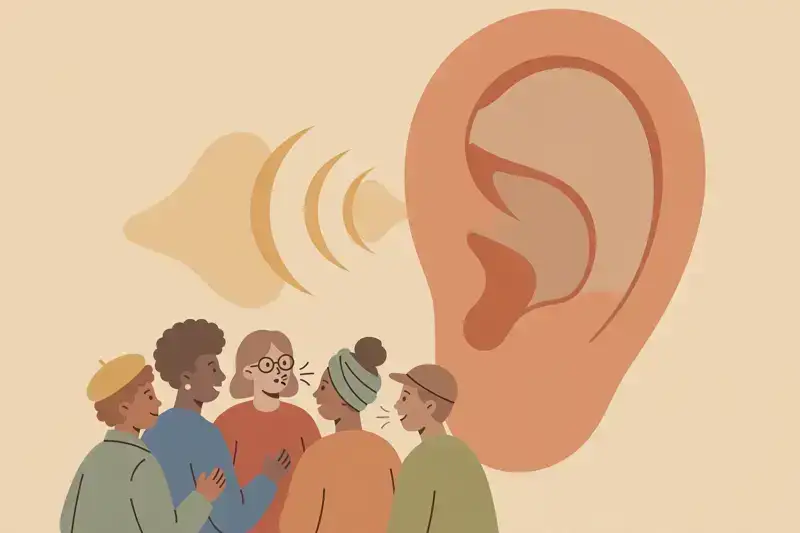
The average person sees thousands of marketing messages a day and remembers almost none of them. Attention is the scarcest resource in the modern economy, scarcer than money, because money can be printed and attention cannot. Every marketing decision starts here: you are competing with everything, not just your competitors.
This has two implications. First, brevity is respect. Say it fast, say it clearly, and stop. The message that takes ten seconds to understand beats the one that takes a minute, even if the longer one is smarter. Second, interruption is expensive. Every time you grab attention you did not earn, you spend trust. Spend it wisely.
The good news: scarcity creates value. Attention given willingly, to something genuinely interesting or useful, is deep and loyal. You do not need everyone's attention. You need the right people's, given freely.
Lesson 2
"Everyone" is not a target audience. It is a confession that you have not thought about it. Marketing to everyone produces messages so generic they move no one. Pick a specific person: not a demographic, a human. What do they worry about at 2am? What do they want that they are embarrassed to admit? What would make their day?
Write it down as a one-paragraph sketch. Give them a name. When you write anything, a post, an ad, a homepage, write it to that person. Specificity feels risky because it excludes people. But the excluded people were never going to buy anyway, and the included person feels like you read their mind.

Test: show your message to five people. If your target person lights up and the others shrug, you nailed it. If everyone nods politely, you wrote for everyone, which means no one.
Lesson 3
"Better" starts arguments. Every competitor claims to be better, and customers have no way to verify it. "Different" starts conversations. The purple cow in a field of brown cows gets noticed without claiming to give better milk. Noticeable beats arguable.
Find your difference by listing what everyone in your space does, then doing the opposite of one thing that matters. Everyone is formal? Be warm. Everyone is cheap? Be premium. Everyone sells features? Sell outcomes. The opposite does not have to be bigger. It has to be visible.
Caution: different for its own sake is just weird. The difference has to connect to something your specific person (Lesson 2) actually wants. Weird gets attention and loses the sale. Relevant difference gets attention and keeps it.
Lesson 4
"Our product is 37 percent faster" is a fact people forget by lunch. "Sarah used to spend her Fridays building reports by hand; now she leaves at three" is a story people retell at dinner. Human brains are story processors with a thin veneer of logic. Speak to the processor.
A marketing story has three parts: a relatable character (your customer, not you), a struggle they recognize, and a transformation your product enabled. Keep it short and specific. Real names, real details, real numbers where they help. Vague stories ("a leading company") feel like fiction because they read like fiction.
Collect stories systematically. After every happy customer, ask: what was life like before, what changed, what would you tell someone considering this? Their words, lightly edited, are better than anything your team will write.
Lesson 5
The most reliable marketing in history is generosity: teach something useful for free, help people without a catch, share what you know. It works because reciprocity is wired into us. When someone has genuinely helped you, you want to return the favor, and you remember who helped.
This is the engine behind content marketing, done right. Not thinly disguised ads, but real teaching: the guide that actually solves the problem, the tool that is genuinely free, the advice with no pitch attached. Give away the knowledge. Sell the implementation, the convenience, the done-for-you version.

Generosity also filters for the right customers. The people who value your free help are the people who will value your paid help. The ones who take and never return were never going to buy anyway. Give freely and let the filter work.
Lesson 6
One brilliant post is a lottery ticket. A hundred good posts on a schedule is a media company. Audiences are built by showing up predictably: same day, same quality, same voice. Each piece is small. The pile is enormous.
Pick a pace you can sustain for a year, then protect it. Weekly beats daily if daily burns you out by March. The algorithm rewards consistency, but more importantly, humans do. People subscribe to what they can count on. Reliability is a feature.
Repurpose ruthlessly. One good idea becomes a post, a short video, an email, and a talk. Consistency does not mean constant invention. It means constant presence. Say the important things many times in many forms; newcomers have not heard them yet.
Lesson 7
Every other channel is rented. Algorithms change, ad costs rise, platforms die. Word of mouth is owned: people telling people, because the thing is worth talking about. It is the highest-trust, lowest-cost channel ever invented, and it cannot be bought, only earned.
You earn it by being remarkable, literally: worth remarking on. Something surprising, delightful, or unusually good. The bar is "would someone mention this unprompted at dinner?" If yes, you have it. If no, no ad budget fixes it. Fix the thing first.
Then make talking easy. Give people the words: a simple way to describe what you do, a link worth sharing, a story worth retelling. Referral programs help, but they amplify remarkability. They do not create it.
Lesson 8
Followers, likes, page views: vanity metrics. They feel like progress and predict nothing. The metrics that matter are the ones tied to money: how many people bought, how much they spent, whether they came back, what it cost to acquire them. If a number cannot change a decision, stop reporting it.
Learn two numbers by heart. Customer acquisition cost: what you spend to get one paying customer. Lifetime value: what that customer is worth over time. If lifetime value comfortably exceeds acquisition cost, you have a machine. Everything else is tuning the machine.
Run small experiments and measure honestly. Change one thing, watch the money metric, keep what works. Marketing without measurement is superstition. Marketing with measurement is a science you can afford.
Lesson 9
A brand is not a logo. It is the promise people believe you will keep: what it feels like to buy from you, every time. Apple promises it just works. A local diner promises comfort and a full plate. Every interaction either keeps the promise or breaks it, and customers keep score.
Promises are kept through consistency, which is why small things matter disproportionately. The tone of the reply email, the packaging, the hold music, the follow-up after the sale. Each is a tiny vote for or against the promise. Brands are built in these unglamorous moments, not in the logo reveal.
Pick a promise you can actually keep, then keep it relentlessly. A modest promise kept beats a grand promise broken, because broken promises do not just lose a customer. They create an anti-evangelist who warns others.
Lesson 10
Uncomfortable truth: the best product usually does not win. The best-distributed good product wins. A masterpiece nobody sees loses to a decent thing with a million fans. Building is half the job. Getting it in front of people is the other half, and most builders skip it.
Distribution means owning a channel to your audience: an email list, a following, a community, a partnership, a shelf. Email beats social because you own it; no algorithm stands between you and your list. Start building yours before you need it. The best time was a year ago. The second best time is today.
Borrow distribution while you build your own. Guest posts, podcasts, partnerships, marketplaces: other people's audiences, used respectfully, jump-start yours. Always convert borrowed attention into owned attention. Followers are rented. Subscribers are owned.
Lesson 11
Here is a weird trick that outperforms most marketing tactics: admit a flaw. "Our software is not the cheapest, and setup takes a day. Here is why people switch anyway." Instant credibility. In a world of hype, candor is so rare it functions as a superpower.
Honesty works because trust converts. Polished claims trigger skepticism; everyone has been burned. A company that volunteers its weaknesses is believed about its strengths. The flaw you admit makes the benefits you claim believable.

This is not a license for false modesty or strategic confessions. People can smell performed honesty. It has to be real: actual limitations, plainly stated, alongside genuine strengths. Real candor, consistently, becomes the brand (Lesson 9).
Lesson 12
Marketing is not a campaign with a start and an end. It is a permanent business function, like accounting or answering the phone. The businesses that treat it as a sometime activity get sometime results. The ones that market every week, in good times especially, compound.
The biggest mistake is stopping when things are good. Pipeline takes months to build. If you only market when you need customers, you will always be three months behind your need. Market when you are busy. That is what keeps you busy later.
Graduation
You know how attention works now: it is scarce, it goes to the specific and the different, it follows stories, it rewards generosity and consistency, it travels by word of mouth, it is measured in money, it trusts promises kept and honesty offered. That is the whole craft. No hacks required, and the hacks would have stopped working anyway.
Get certified
Prove you know it. Earn your Marketing 101 certificate.
10 questions. Score 7 or more. $5, yours forever.
Keep learning
This course is part of Starvard University, striving for greatness.
A note on accuracy: Much of what you read at Starvard was created with help from AI agents, working alongside people. We check what we can, but we cannot guarantee that everything here is true, current, or complete. If something really matters, your health, your money, a grade, a job, please verify it with a trusted source before you rely on it.