Starvard University · Friendship
Make friends as an adult and keep them. Twelve plain-English lessons on meeting people, going deeper, and staying close for decades. Friendship is a skill, and skills can be learned.

The whole course in brief
The twelve lessons
Lesson 1
In school, friendship was automatic. You saw the same people every day, and proximity did the work. Then adulthood scattered everyone, and most people quietly stopped making new friends. Not because they stopped wanting them, but because nobody told them the rules changed. The new rule is simple: adult friendship is intentional or it does not happen.
This is actually good news. It means the loneliness so many adults feel is not a character flaw. It is a systems problem. You do not need to be more interesting, more attractive, or more fun. You need a repeatable way to meet people and a habit of following up. Friendship after twenty-five is a practice, like exercise. The people with rich social lives are not luckier. They just kept showing up.
Start by accepting the math. Researchers estimate it takes roughly 50 hours together to go from acquaintance to casual friend, and around 200 for a close friend. That sounds like a lot until you realize it is just a weekly coffee for a year. Time plus repetition is the whole formula. Everything in this course is about creating those hours on purpose.
Lesson 2
The single most effective friendship strategy is to join something that meets on a schedule. A running club, a volunteer shift, a class, a church group, a rec league, a book club. The activity matters less than the repetition. Seeing the same faces weekly turns strangers into familiars, and familiars into friends, with almost no awkwardness required.
Pick something you genuinely enjoy, because you will actually go. Then go every time, and stay a little after. The first few visits, just learn names and be friendly. By visit six, you are a regular, and regulars get adopted. Volunteer for the small jobs: setup, the group chat, organizing the post-meeting coffee. Useful people become central people.
Give it three months before judging. Most people quit a new group after two awkward visits, right before the familiarity kicks in. The awkwardness is the entrance fee. Everyone in that room paid it once. Stay long enough to become part of the furniture, and the friendships follow.
Lesson 3
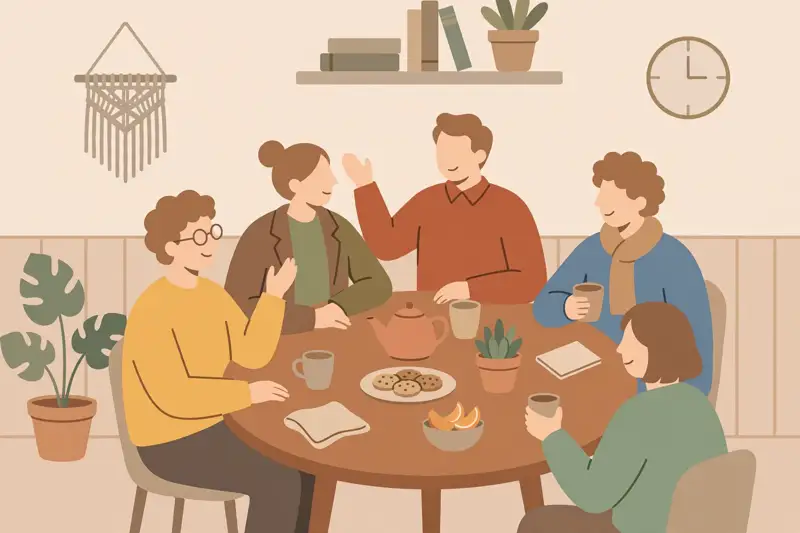
Here is a secret about adults: almost everyone wants more friends, and almost everyone is waiting to be invited. The person who invites is the person who ends up with the full calendar. You do not need permission, a perfect plan, or a cool venue. "A few of us are grabbing tacos Thursday, want to join?" is a complete invitation.
Start small and specific. Invite one person for coffee after the thing you both attend. Invite three people to something easy: a walk, a game night, a potluck where everyone brings something so hosting costs you nothing. Small beats big early on. A dinner for four creates conversation. A party for twenty creates small talk.
Do not take declines personally. People are busy, tired, and flaky, and a no usually means "not this week." Invite again in a few weeks. The rule of thumb: invite three times before you conclude someone is not interested. Most friendships that exist today survived two declined invitations. Persistence, kindly done, is how it works.
Lesson 4
Most adult friendships stall at the small-talk stage forever. Both people are waiting for the other to go deeper, so nobody does. The fix is to go first. Share something real: a struggle, a fear, a dream, a story you do not tell everyone. Vulnerability is the door. Someone has to open it.
Calibrate it. Going first does not mean trauma-dumping on a new acquaintance. Match the depth of the relationship and go one step deeper. With a new friend: an honest opinion, a real story from your week, admitting you are nervous about something. With a growing friend: the thing you are actually worried about. Each step of honesty invites a matching step back.
Notice what happens. When you share something real, people almost always respond with something real, and the whole relationship shifts up a level in one conversation. The friends who meet your honesty with honesty are your people. The ones who deflect or mock have told you something useful too. Vulnerability is a filter as well as a bridge.
Lesson 5
Friendships die from neglect, not drama. Nobody decides to end a friendship; they just stop texting, stop calling, stop showing up, and one day it has been two years. The antidote is small, consistent contact. A text that says "saw this and thought of you." A birthday remembered. A quick call on a drive. Tiny deposits, made regularly, keep the account full.
Build it into your life as a system, not a mood. Keep a short list of the friends who matter most and rotate through it: text two people every Sunday, call one on your commute, schedule one coffee a month. It sounds mechanical. It works anyway, because what gets scheduled gets done, and your friends feel the consistency as love.
Use the details. When someone mentions the job interview, the sick parent, the kid's recital, write it down and follow up. "How did the interview go?" is one of the most powerful sentences in friendship. It says: I listened, I remembered, you matter to me. Nobody forgets the person who remembers.
Lesson 6
There is a gap between "person I see at the running club" and "person I call when life falls apart." Crossing it takes one thing: time together outside the activity. The group setting is safe but shallow. One-on-one is where the real friendship forms. Invite the person for coffee after the run. Suggest lunch. The bridge is always a smaller setting.
Do not wait for a magical moment of closeness. Engineer it. Shared experiences accelerate bonding: a day trip, cooking a meal together, helping them move, a weekend project. Working side by side creates the easy conversation that sitting across a table sometimes cannot. Some of the deepest friendships were built carrying couches and painting walls.
Let it be a little awkward at first. The first solo hangout with an activity friend can feel like a first date. That is normal and it passes by hangout three. If you enjoy their company in the group, you will probably enjoy it one-on-one. Give it three tries before deciding. Most people are better friends than they are small-talkers.
Lesson 7
Every real friendship hits a rough patch: a missed call during a crisis, a thoughtless comment, a slow drift, a genuine disagreement. Most friendships do not end because of the rift. They end because nobody repaired it. Both people feel awkward, both wait, and the silence calcifies into distance.
Be the one who goes first. "Hey, I feel like things have been weird between us, and I miss you. Can we talk about it?" That sentence has saved more friendships than any other. Name what happened without prosecuting it. Listen to their side fully. Apologize for your part sincerely, even if it was only ten percent. Ten percent owned beats one hundred percent defended.
Know the difference between a rift and a pattern. A rift is a moment worth repairing. A pattern of disrespect, one-sidedness, or cruelty is information worth acting on. Repair the rifts. Release the patterns. And if someone will not meet you halfway after an honest attempt, you have your answer. You can love the memory and let the friendship rest.
Lesson 8
Not every friendship is meant to last forever, and that is not a failure. Some people are perfect for a season of your life: the coworker years, the new-parent years, the city you used to live in. When the season ends, the friendship may naturally fade. Letting it fade gracefully is healthier than forcing it or grieving it as a loss.
Watch for the signs of a season ending. Every interaction feels like obligation. You have nothing in common anymore except history. You leave every hangout drained. These are not betrayals. They are completions. Thank the friendship for what it was. Keep the door open. Some seasonal friendships bloom again years later in a new season.
Release without resentment. Do not ghost someone who mattered to you; a warm, honest note costs little. "Life has pulled us in different directions, and I am grateful for our years. Door is always open." Then invest the freed energy in the friendships that are alive now. Your social energy is finite. Spend it where it grows.
Lesson 9
The fastest way to get better friends is to be one. Celebrate their wins loudly and specifically. Show up for the hard things: the funeral, the hospital visit, the moving day. These are the moments friendships are truly made, and most people skip them because they are inconvenient. Inconvenient is the point.
Learn their details and use them. Their coffee order, their kid's name, the project they are stressed about, the band they love. Then surprise them with it: the article about their niche interest, the text before the big meeting, the small gift that proves you listen. Thoughtfulness is a superpower because it is so rare.
Be honest and be fun. Tell them the truth kindly when they need to hear it; a friend who only flatters is a fan, not a friend. And bring lightness: laugh, play, be the person who suggests the ridiculous plan. Friendship needs both depth and delight. Be the one who brings both.
Lesson 10
One-on-one friendships are wonderful, but circles are what make a social life resilient. A circle is a small group, four to ten people, that meets regularly: a dinner group, a hiking crew, a game night, a supper club. When one friendship is in a busy season, the circle carries you. When someone moves away, the circle remains.
Start absurdly simple. Pick a rhythm: first Friday dinner, Sunday morning hike, Tuesday game night. Invite five to eight people, tell them it is recurring, and host the first three yourself so it becomes real. Keep the format dead simple so hosting never feels like a burden. Potluck. Everyone brings something. Paper plates are fine.
Protect the rhythm. The circle survives on consistency, not perfection. Some weeks only three people come. That is fine. Three people having a great time beats ten people rescheduling forever. Over a year, the circle becomes one of the best things in your life, and you will wonder why you did not start it sooner.
Lesson 11
Loneliness is one of the most common human experiences and one of the least discussed. If you feel lonely in a crowded city, surrounded by acquaintances but known by no one, you are not broken. You are experiencing what happens when connection gets deprioritized. Naming it is the first step. Shame keeps it hidden; honesty starts fixing it.
Treat loneliness as a signal, not an identity. It is your social hunger telling you to eat. The fix is action, not insight: join the thing, text the person, show up this week. Start embarrassingly small. One group, one invitation, one coffee. Momentum matters more than magnitude. The first friend is the hardest; the fifth comes easier.
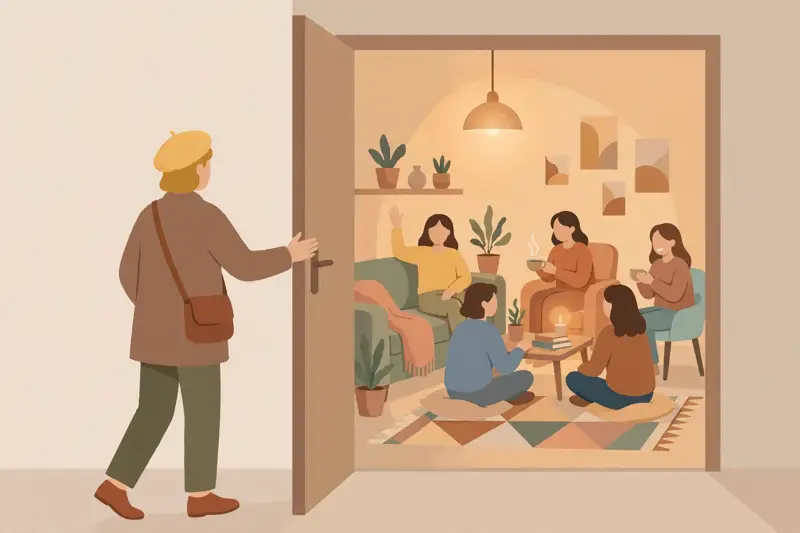
Watch the stories your mind tells. Loneliness whispers that nobody wants you around, that you are too much or not enough, that reaching out will end in rejection. These are symptoms, not facts. The evidence says otherwise: most people are delighted to be invited, most groups welcome newcomers, most friendships started with one awkward hello. Act before you feel ready. The feeling follows the action.
Lesson 12
Long friendships are not maintained by intensity. They are maintained by rhythm. The friends you still have in twenty years will be the ones you built small rituals with: the annual trip, the birthday call, the group chat that never dies, the standing coffee. Rituals survive busy seasons that willpower cannot.
Expect the friendship to change shape. There will be years of weekly hangs and years of quarterly calls. Careers, moves, marriages, kids: life will stretch the friendship thin at times. The ones that last are the ones where both people keep reaching across the distance, even when it is just a text that says "thinking of you, no need to reply."
Play the long game on purpose. Keep the list. Make the calls. Show up for the big moments even when it costs you. Twenty years from now, your friendships will be among your most precious possessions, and every one of them started with the small brave steps in this course. Start this week. Future you is counting on it.
Graduation
Join the thing that meets weekly. Invite someone to coffee. Share something real. Text back. Show up for the hard stuff. Build a circle. Repair the rifts, release the seasons, and keep the rituals. Friendship is not a mystery for lucky people. It is a practice for intentional ones. Start this week.
Keep learning
This course is part of Starvard University, striving for greatness.
A note on accuracy: Much of what you read at Starvard was created with help from AI agents, working alongside people. We check what we can, but we cannot guarantee that everything here is true, current, or complete. If something really matters, your health, your money, a grade, a job, please verify it with a trusted source before you rely on it.