Starvard University · Civics
How your country actually works: the three branches, how laws get made, how voting works, where your taxes go, and what you can do about all of it.

The whole course in brief
Twelve lessons, twelve big ideas.
The twelve lessons
Lesson 1
Politics decides the quality of your water, the safety of your streets, the cost of your healthcare, and whether your kid's school has working heat. It is not a spectator sport for other people. It is the operating system of your daily life, and most people never read the manual.
The good news: you do not need a law degree. You need the basic map this course gives you: who decides what, how they get the job, and where you can push. An informed citizen is not a political junkie. It is just an adult who knows how the machine works.
Lesson 2
The founders split power three ways on purpose. Congress (legislative) makes the laws. The President (executive) carries them out. The courts (judicial) interpret them and settle disputes. Each branch checks the others: the President can veto Congress, Congress can override vetoes and control the money, courts can strike down laws, and Congress confirms judges.
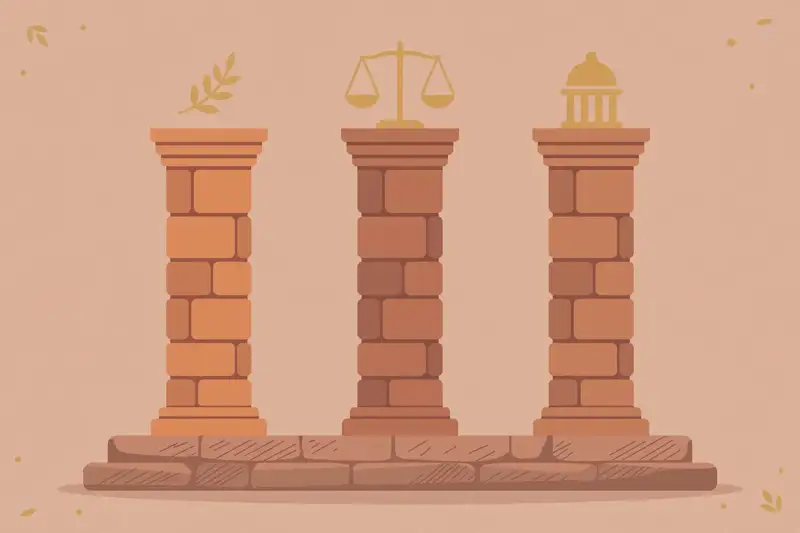
The point was not efficiency. It was safety. Concentrated power corrupts, so they built a system where ambition checks ambition. It is slow and frustrating by design. When government gridlocks, that is often the system working as intended, not broken.
Lesson 3
The Schoolhouse Rock version is true but incomplete. A member of Congress introduces a bill. It goes to committee, where most bills die quietly. Survivors get debated, amended, and voted on in one chamber, then the whole thing repeats in the other chamber. Both versions must match. Then the President signs or vetoes. Congress can override a veto with two-thirds votes, which almost never happens.
The real version adds: lobbyists writing drafts, riders attached to must-pass bills, filibusters in the Senate requiring 60 votes to break, and reconciliation tricks to dodge the filibuster. Thousands of bills are introduced each Congress. A handful become law. The system filters for ideas that can survive scrutiny from many angles, which is a feature, mostly.
Lesson 4
The President is head of state, head of government, and commander-in-chief of the military. The real powers: signing or vetoing laws, issuing executive orders (which direct the executive branch but cannot override Congress), appointing judges and officials (with Senate confirmation), conducting foreign policy, and pardoning federal offenses.
What the President cannot do: spend money Congress did not approve, make laws alone, or override the courts. Executive orders get outsized attention because they are visible, but the durable stuff, budgets, programs, rights, runs through Congress and the courts. Judge presidents by what they actually control, not by everything that happens on their watch.
Lesson 5
You do not vote directly for President. You vote for electors pledged to a candidate, and the electors vote. Each state gets electors equal to its House seats plus Senate seats. Almost all states award them winner-take-all. Reach 270 of 538 and you win, even without the national popular vote, which has happened five times.
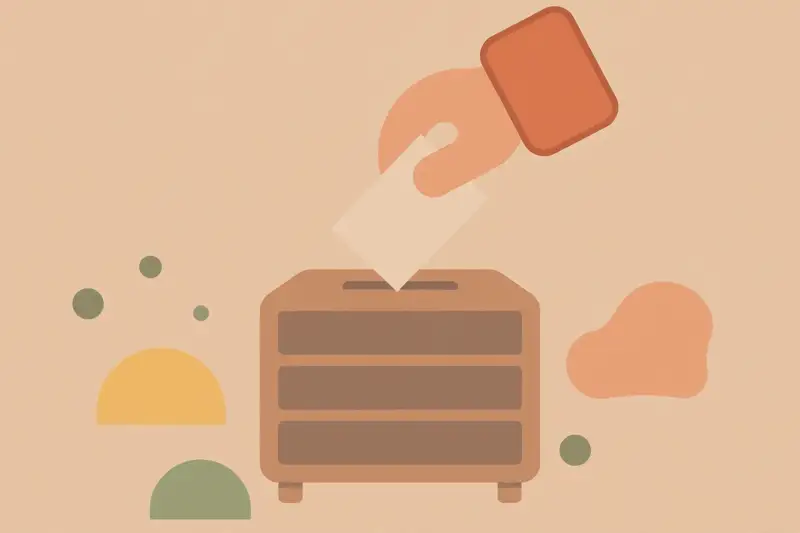
Love it or hate it, the system shapes strategy: candidates focus on swing states, and safe states get ignored. Meanwhile your vote matters most where it is closest to the margin, which is usually local races and primaries, not the presidential race. Register, know your deadlines, and vote down the whole ballot.
Lesson 6
Parties are coalitions, big tents of groups with overlapping interests, not ideological churches. The platform is the wish list; the reality is whatever the coalition can agree on. And here is the secret most people miss: in most districts, the general election is a foregone conclusion. The primary is the real election.
Primaries have low turnout, which means each vote counts enormously. A few thousand motivated voters can decide who represents hundreds of thousands. If you want influence, vote in primaries, and know that switching parties or registering strategically is legal gamesmanship, not cheating. The teams are tools. Use them; do not worship them.
Lesson 7
Courts do not make policy directly, but their rulings shape everything: what laws are allowed, what rights you have, how elections run. Federal judges serve for life, deliberately insulated from elections so they can rule against popular opinion. The Supreme Court takes about 70 cases a year out of thousands of requests, choosing the ones that settle big questions.
Judicial review, the power to strike down laws, is not in the Constitution's text; the Court claimed it in 1803 and everyone went along. That tells you something important: the system runs on norms and acceptance as much as on written rules. Courts have power because the other branches, and the public, treat their rulings as final.
Lesson 8
Your mayor, city council, county commission, school board, and sheriff affect your daily life more than the President does. They set property taxes, zone your neighborhood, fund your schools, pave your roads, and decide how policing works. Yet local elections often draw single-digit turnout.
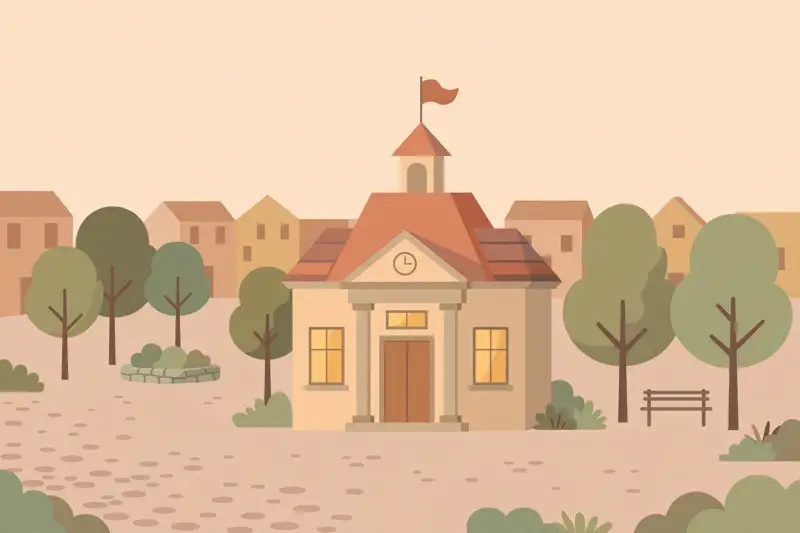
This is the biggest arbitrage in citizenship: tiny effort, huge influence. A few hundred votes can swing a city council seat. Show up to one meeting and you are suddenly one of the most engaged citizens in town. If national politics feels hopeless, go local. That is where the levers are within reach.
Lesson 9
The Bill of Rights lists the big ones: speech, religion, press, assembly, arms, due process, and more. But rights are not self-executing. They are boundaries the government is not supposed to cross, and they only hold when people know them and courts enforce them. Every right has edge cases the courts are still arguing about.
Two practical notes. First, most constitutional rights restrain the government, not private actors: a social media company is not Congress. Second, rights conflict: your speech versus someone's safety, religious liberty versus anti-discrimination law. The courts balance them case by case. Knowing your rights means knowing they are real, limited, and yours to use.
Lesson 10
Campaigns cost money, and money comes with expectations. The system: individuals and PACs donate with limits, Super PACs spend unlimited amounts independently, and lobbying firms get paid to bend legislators' ears. The honest view is not "all politicians are bought." It is that access follows money, and access shapes what gets heard.
What actually moves a politician: votes first, then money, then noise. A thousand angry constituents beat a big check, because the check cannot vote. That is why organized small donors and loud local groups punch above their weight. Follow the money to understand a position, but remember the vote is still the ultimate currency.
Lesson 11
Federal taxes come mostly from individual income tax and payroll tax. The big spending buckets: Social Security, Medicare and Medicaid, defense, and interest on the debt, which together eat most of the budget. Everything else people argue about is a sliver by comparison.
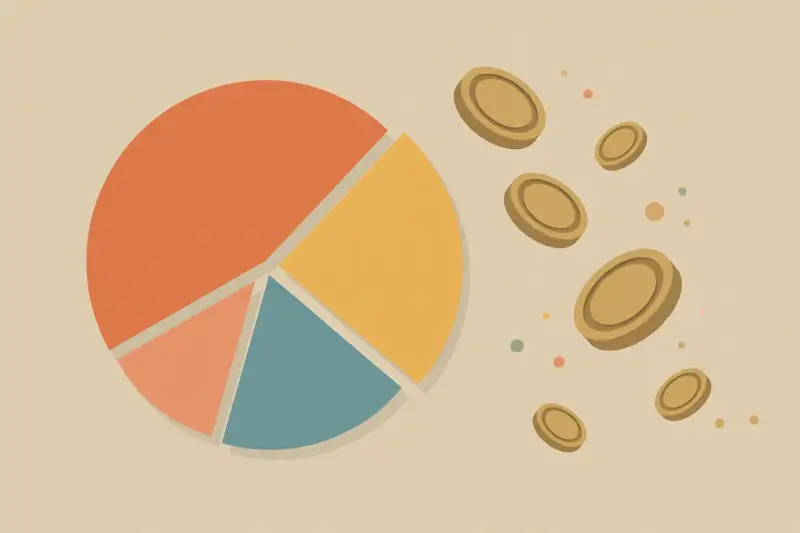
State and local taxes (property, sales, state income) fund schools, roads, and police. The total tax picture is what matters, not any single tax. And every budget is a values statement: it shows what the country actually prioritizes, regardless of the speeches. Read the budget, skip the press release.
Lesson 12
Voting is the minimum, not the maximum. The full toolkit: vote in every election including primaries and local races, contact your representatives (a personal letter beats a form email; a visit beats a letter), show up to local meetings, serve on a jury when called, and talk politics with actual humans instead of just screens.
Democracy is not a machine that runs itself. It is a group project with 330 million members, and it degrades exactly as fast as citizens check out. The system gives you real levers. This course was the manual. Now go pull one.
Graduation
Three branches, slow by design. Bills that mostly die. An Electoral College, primaries that matter more than generals, courts that run on acceptance, local government that runs your life, taxes that fund values, and a citizenship that is a verb. Most Americans never learn this map. You just did. Use it.
Keep learning
This course is part of Starvard University, striving for greatness.
A note on accuracy: Much of what you read at Starvard was created with help from AI agents, working alongside people. We check what we can, but we cannot guarantee that everything here is true, current, or complete. If something really matters, your health, your money, a grade, a job, please verify it with a trusted source before you rely on it.